Helmets in the 13th Century
Let us briefly review the helmets used in the 13th century.
In the 12th century, one of the most popular types was the so-called Norman helmet. The helmet's crown is spheroconical in shape and
can be either a single piece or constructed from segments. Additional
facial protection could be provided by a nasal guard or—much more rarely—a full face mask. There are other types of additional
head protection as well, though describing them falls outside the scope of this article.
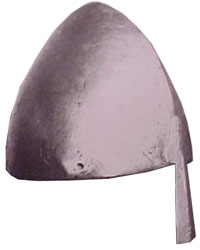
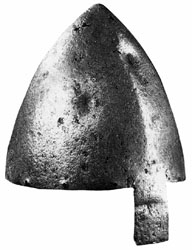
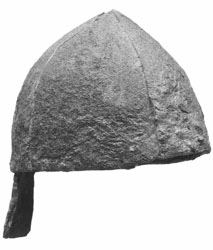
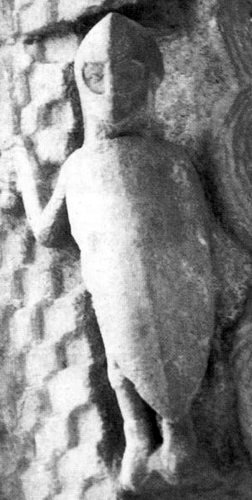
Illustration – one-piece forged Norman helmet, presumably 12th century;
Norman helmet, Olomouc (Moravia), presumably 12th century – MAA;
Norman helmet made of four joined segments, Northern France or River Thames, presumably 12th century – MAA;
Norman helmet with a half-mask, Santa Maria la Real, Sangüesa, Navarre, Spain, 1155.
The Norman helmet remained popular and in use into the early 13th century, though it was employed less frequently until the early 14th century.
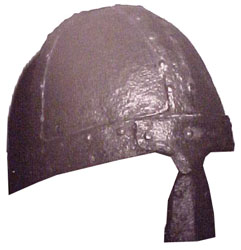
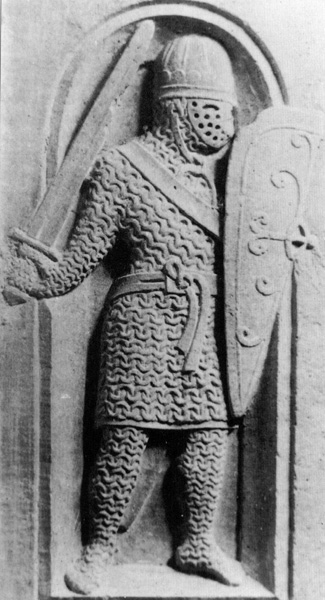
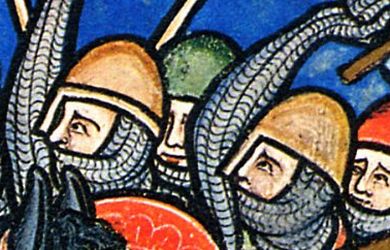
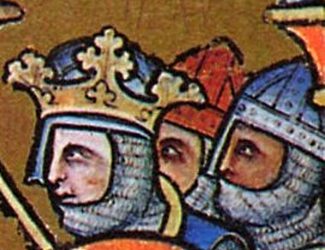
Illustration – Norman helmet made of four segments joined by a framework of strips, presumably early 13th century;
Norman helmet with a half-mask, Italy, 1210;
one-piece forged Norman helmet – image from the Maciejowski Bible, mid-13th century. century;
four-segment Norman helmet – illustration from the Maciejowski Bible, mid-13th century.
The *chapel de fer* (kettle hat) became a common infantry helmet in the 13th century (though this type of helmet could also be used by mounted troops).
The kettle hat likely appeared in the late 12th century. The bowl of the helmet could be either rounded or
shaped like a truncated cone. The brim was forged from a single piece of metal. There is a wide variety of kettle hat shapes.
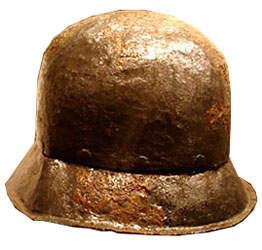
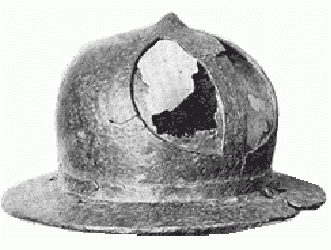
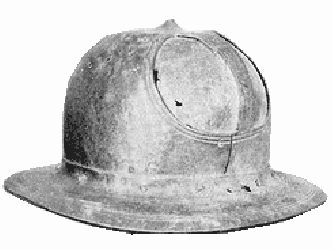

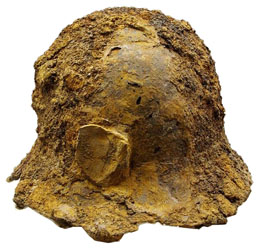
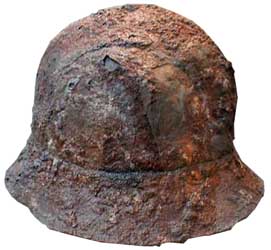
Illustration – one-piece forged kettle hat; brim riveted to the inside of the bowl, 1233;
kettle hat; the holes originally held soft metal or leather, 1290–1310;
kettle hat, 1290–1310;
Kettle hat, Norway Hoff, first half of the 14th century;
kettle hat, early 14th century;
kettle hat, 13th–14th centuries;
Depictions of *chapels* (war hats) appear frequently in 13th-century manuscript illuminations.
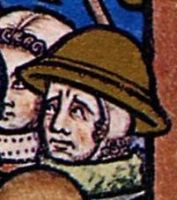
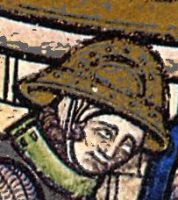

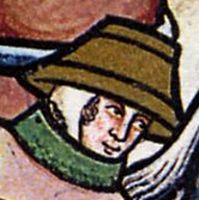
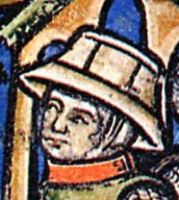
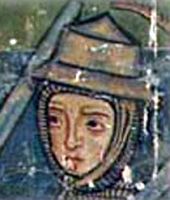
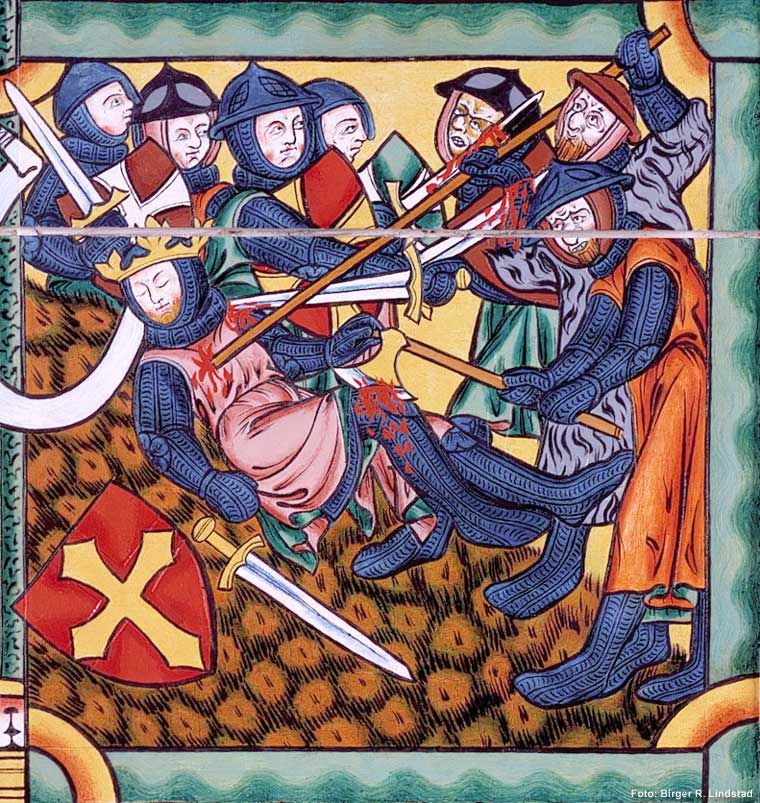
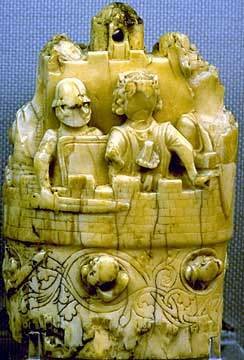
Illustration – *chapel*, one-piece forged crown, riveted brim, Maciejowski Bible, mid-13th century;
*chapel*, spherical crown made of two segments, Maciejowski Bible, mid-13th century;
*chapel*, spherical crown made of two segments, Maciejowski Bible, mid-13th century;
*chapel*, truncated-cone crown, one-piece, Maciejowski Bible, mid-13th century;
*chapel*, truncated-cone crown made of segments, Maciejowski Bible, mid-13th century;
one-piece forged *chapel* – Gozzoburg in Krems (Lower Austria), Metropolitan Museum of Art, New York, presumably 13th century;
*chapel* with leather cheek pieces, 1320–30;
presumed *chapel* with a half-mask; chess piece (*pièce d'échecs*), England, 1200–1220.
Another helmet used in the 13th century was the cervelliere. It is believed that this helmet was worn beneath a great helm (*Topfhelm*), but it could also be used as a standalone helmet. The cervelliere had a hemispherical shape.

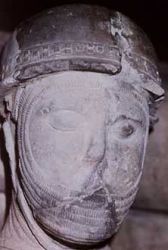
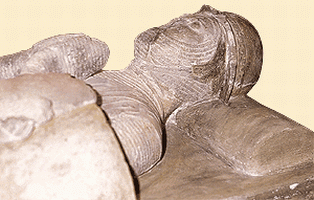
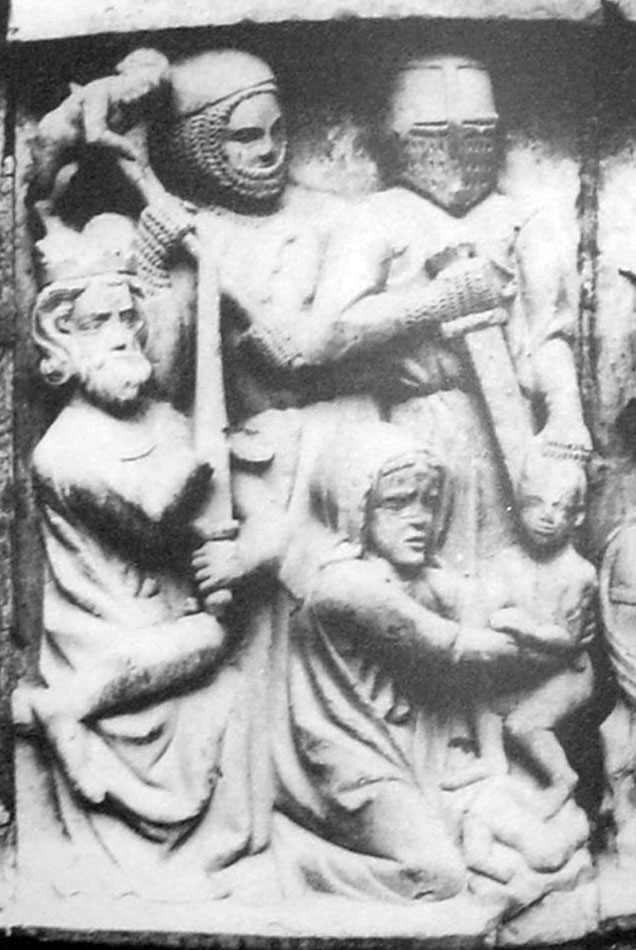

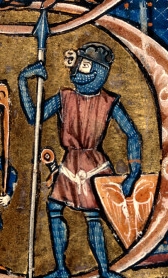
Illustration: cervellière from Niederrealta; the helmet features a two-layer lining riveted to the skull; second half of the 12th century;
cervellière, effigy of Guillaume de Friardel, 1233;
cervellière, effigy of Guillaume de Friardel (alternate view), 1233;
cervellière, Santa María la Real de Olite, Navarre, 1300;
cervellière, Maciejowski Bible, mid-13th century;
cervellière, Maciejowski Bible, mid-13th century;
cervellière with nasal guard, *Psautier à usage de Limoges*, 1240–1250;
A common helmet throughout the 13th century was the *Topfhelm* (German for "pot helm").
The earliest depictions of this helmet date to the late 12th century.
It was used primarily by mounted warriors.
Early forms of the *Topfhelm* lack a rear plate.
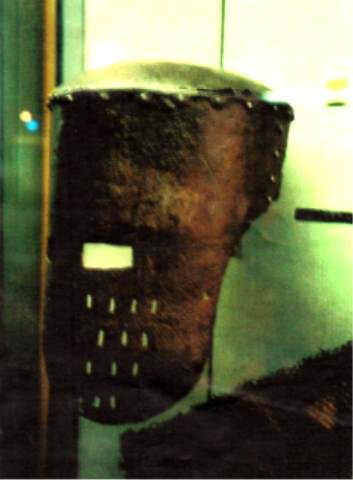
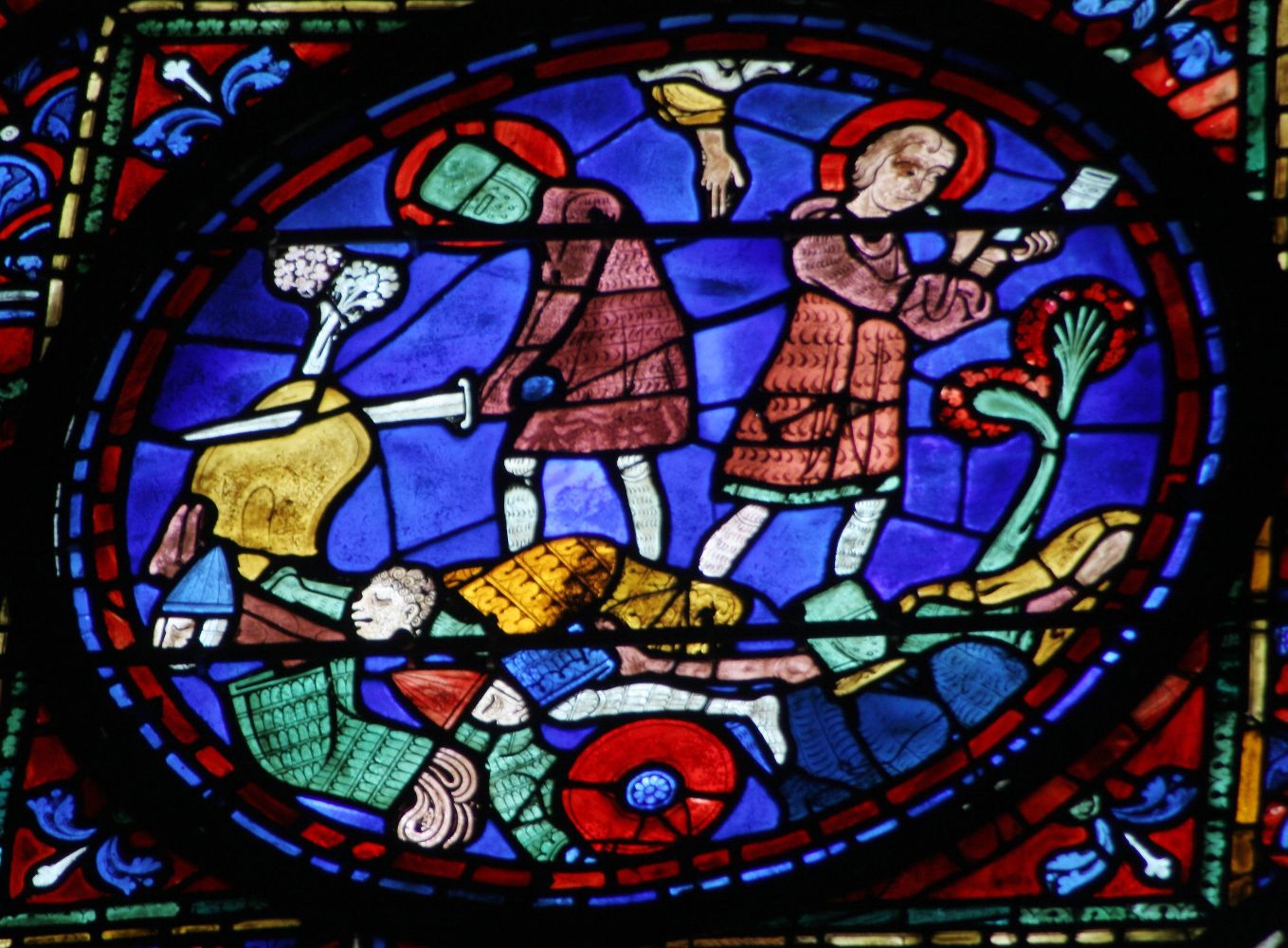
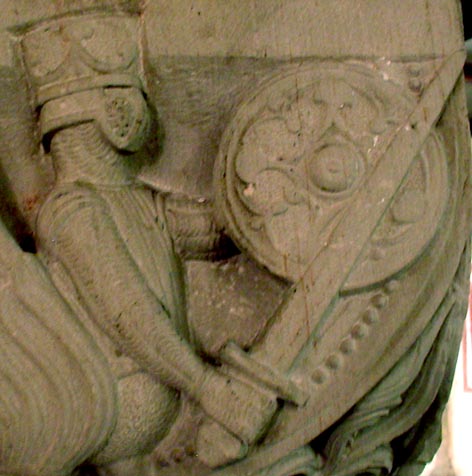
Illustration – Early *Topfhelm* (great helm), unattributed;
Early *Topfhelm*, Charlemagne stained-glass window (Roland breaking his sword and blowing his horn), Notre-Dame Cathedral, France, 1225;
Early *Topfhelm* with a small neck guard, first half of the 13th century;
By the mid-13th century, a wide variety of *Topfhelm* shapes had emerged.
Let us examine the flat-topped *Topfhelm*.
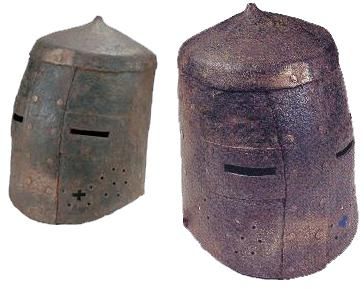
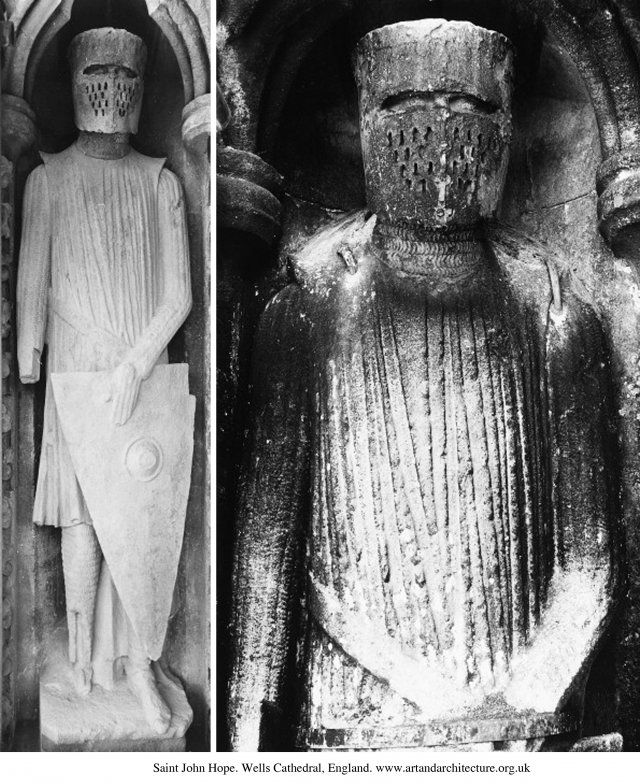
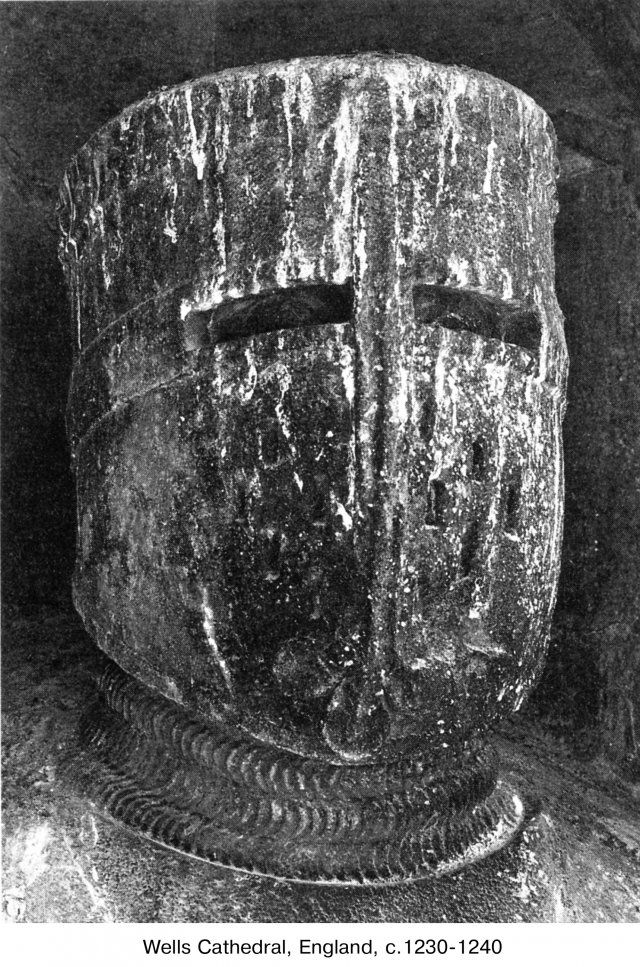
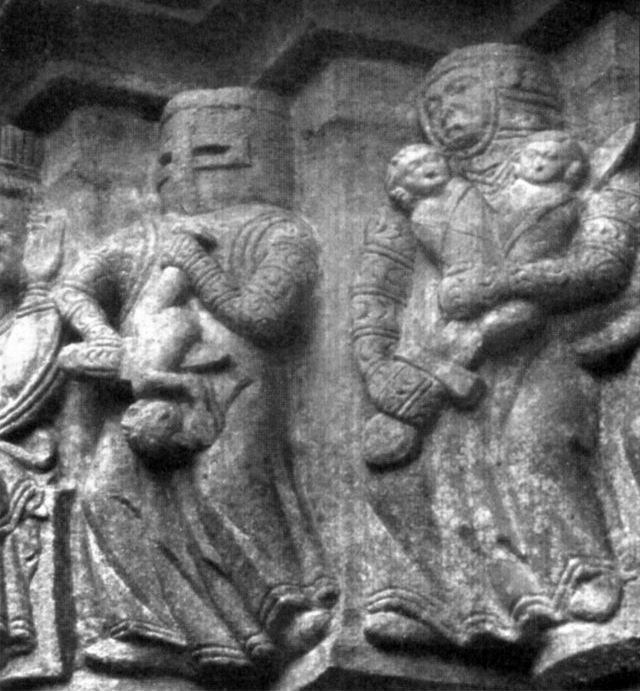
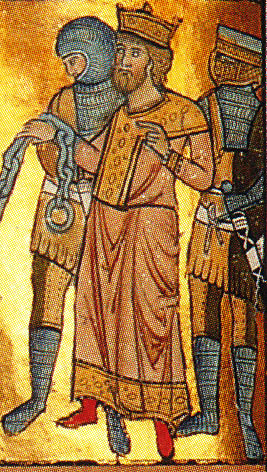
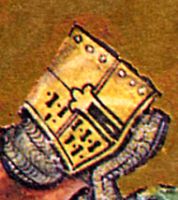
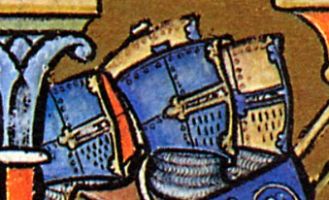
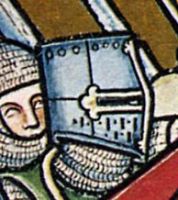
Illustration – Great helm, assembled from three parts, applied cruciform reinforcement, c. 1300;
Great helm, Wells Cathedral, England, 1230–1240;
Great helm, Wells Cathedral, England, 1230–1240;
Great helm, Church of Lye, Gotland, Sweden, 1300;
Great helm, miniature from the *Elisabethpsalter* (Psalter of St. Elizabeth), leading away of captive Jews, fol. 139v, 1220;
Great helm, Maciejowski Bible, mid-13th century;
Great helm, Maciejowski Bible, mid-13th century;
Great helm, Maciejowski Bible, mid-13th century;
Another type was the great helm with a hemispherical or spheroconical crown.
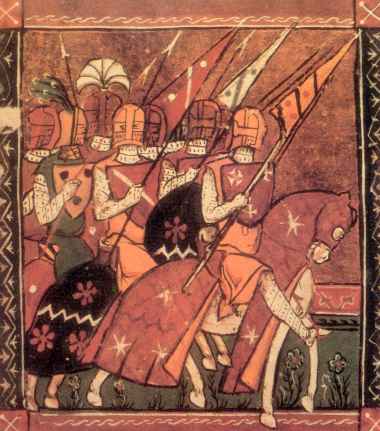
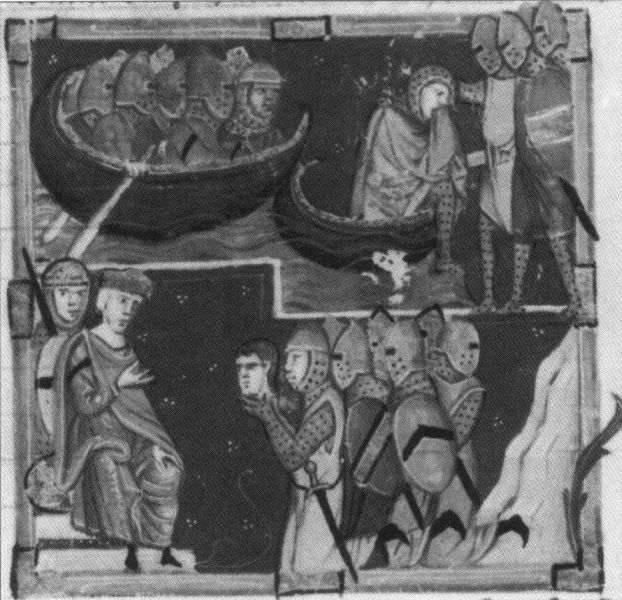
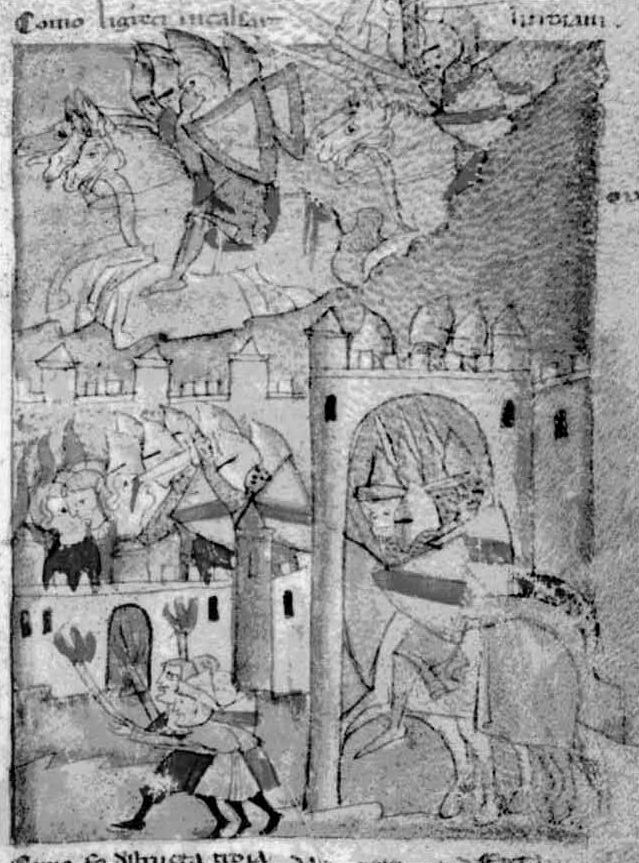
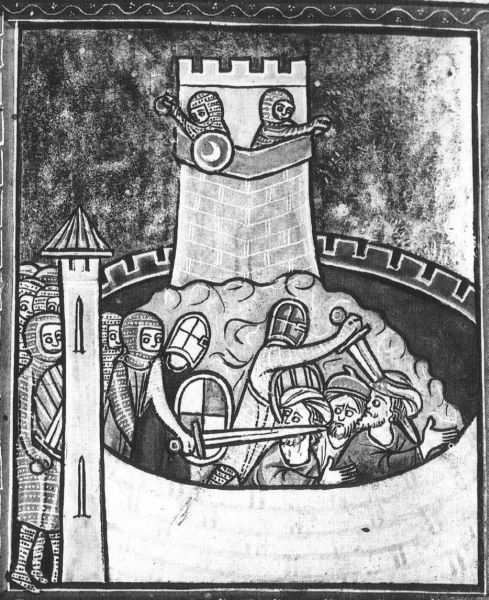
Illustration – The First Crusader Godfrey of Bouillon leading his army, 13th century;
Faits des Romains, Bib. Royale, Ms.10168-72, Brussels, 1233;
Faits des Romains, Bib. Royale, Ms.10168-72, Brussels, 1233;
History of Outremer, Acre (Bib. Laur., Ms. Plut. LXI.10.f.61, Florence), 1290–91;
In the second half of the 13th century, *Topfhelms* (great helms) with a crown tapering towards the top (a truncated cone shape) appear.
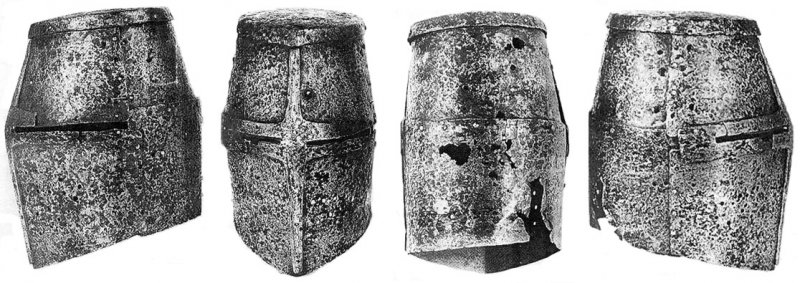
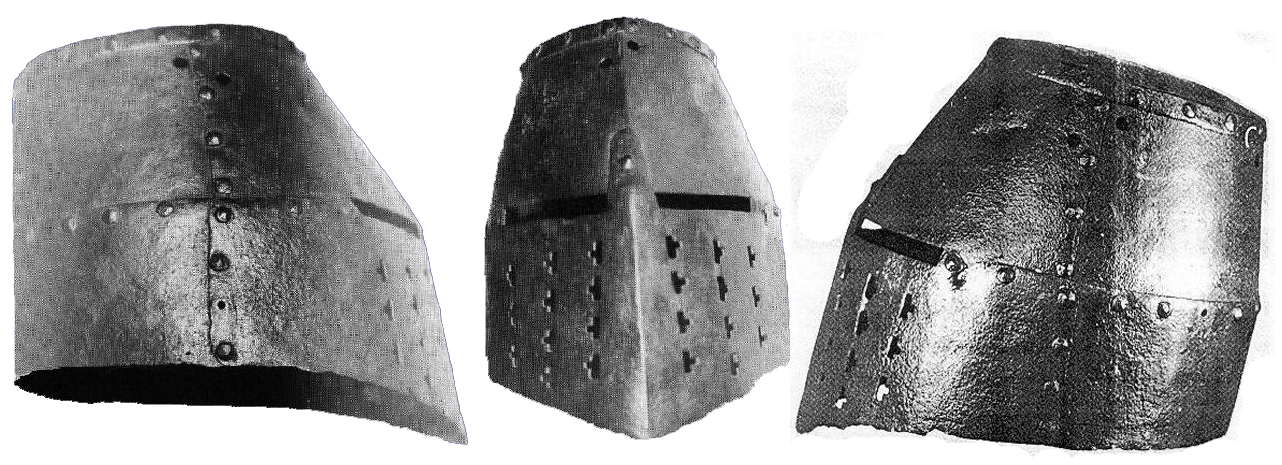
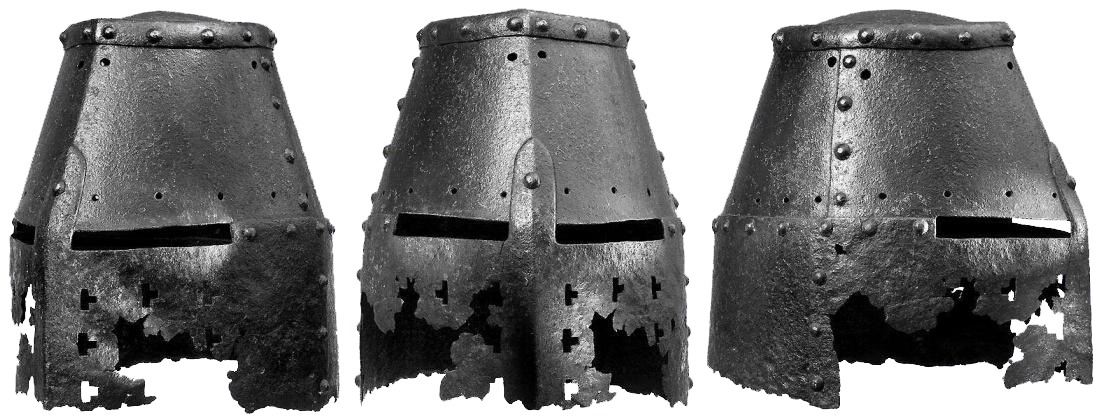
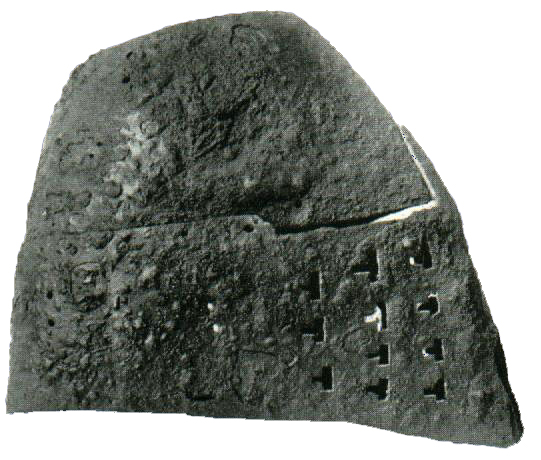
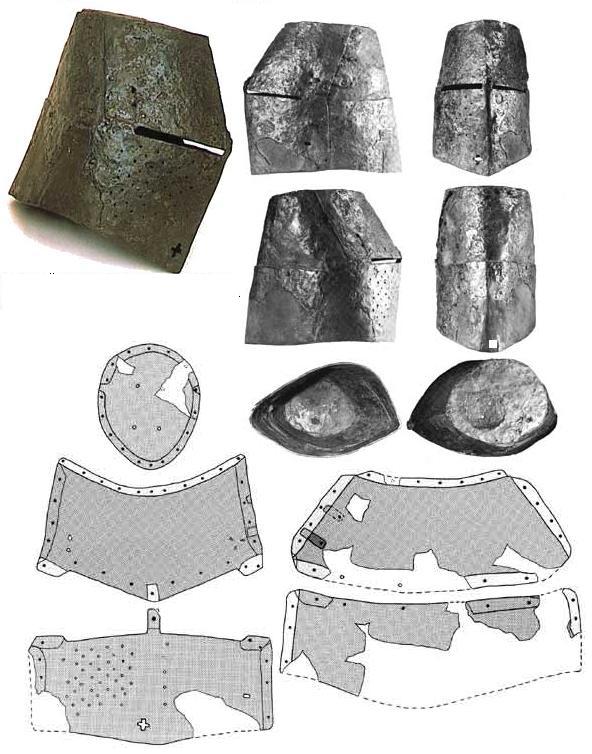
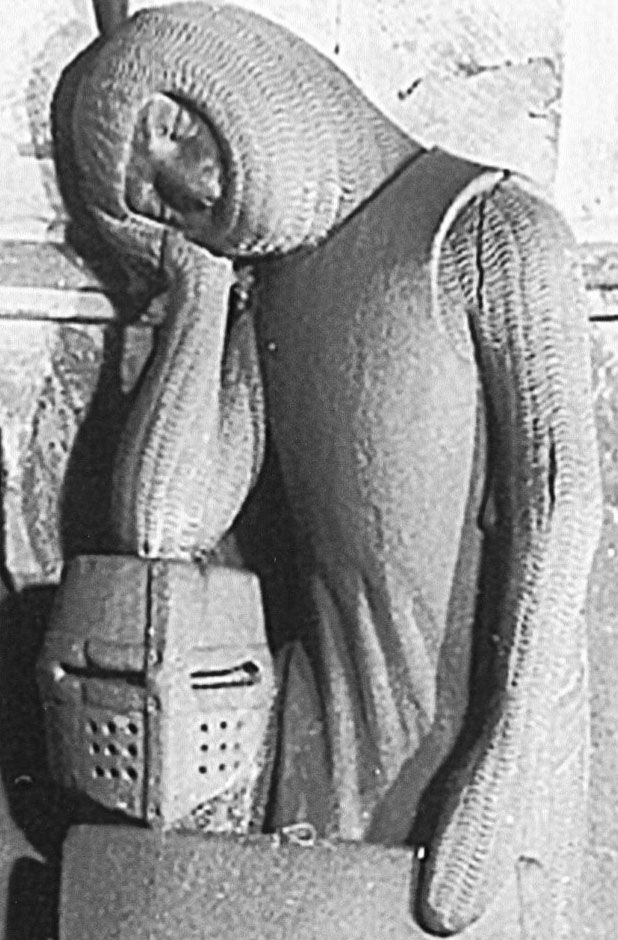
Illustration – Great Helm (*Topfhelm*) from Dargen Castle, late 13th century;
Great Helm found in a tower in Bolzano. Front height: 29 cm; rear height: 21.5 cm; circumference: 31–22 cm; weight: 2.5 kg. Presumably of German workmanship, c. 1300;
Great helm resembling the Great helm from Bolzano;
Great helm from Arnaas Castle, Sweden, weight 2.34 kg. Statens historiska museum, Stockholm, 1300;
Great helm from Madeln Castle, Type 1, weight 2.45 kg, 1300;
Great Helm, Konstanz Minster, 1280;
Great Helm, Santa María la Real de Olite, Navarre, 1300;
The general evolution of helmets throughout the 13th century can be illustrated as follows.
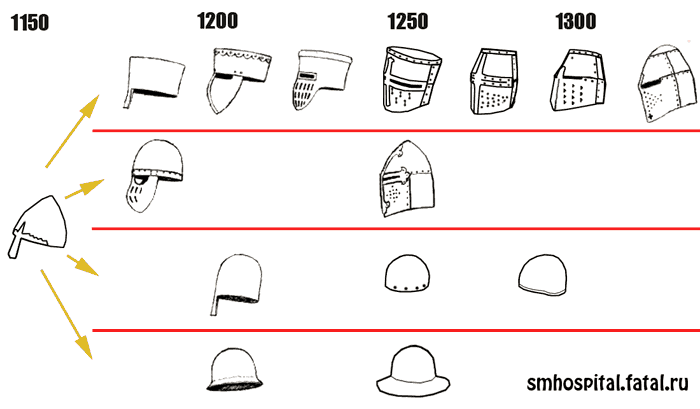
Illustration: Evolution of helmet shapes in the 13th century (Material slightly revised. Original material.)
Bibliography
Osprey "Man-at-Arms" series (MAA).
Maciejowski Bible, mid-13th century.
Helme der Gotik und ihre Entwicklung (http://www.historiavivens1300.at/helme/index.htm)
Selection of Great Helms from the site http://holger.sitecity.ru/album_1406150011.phtml
Niederrealta helmet http://www.tgorod.ru/index.php?topgroupid=2&groupid=7&subgroupid=&contentid=244
Compiled by © Enton, 2008
Comments (0)
No comments yet. Be the first!